
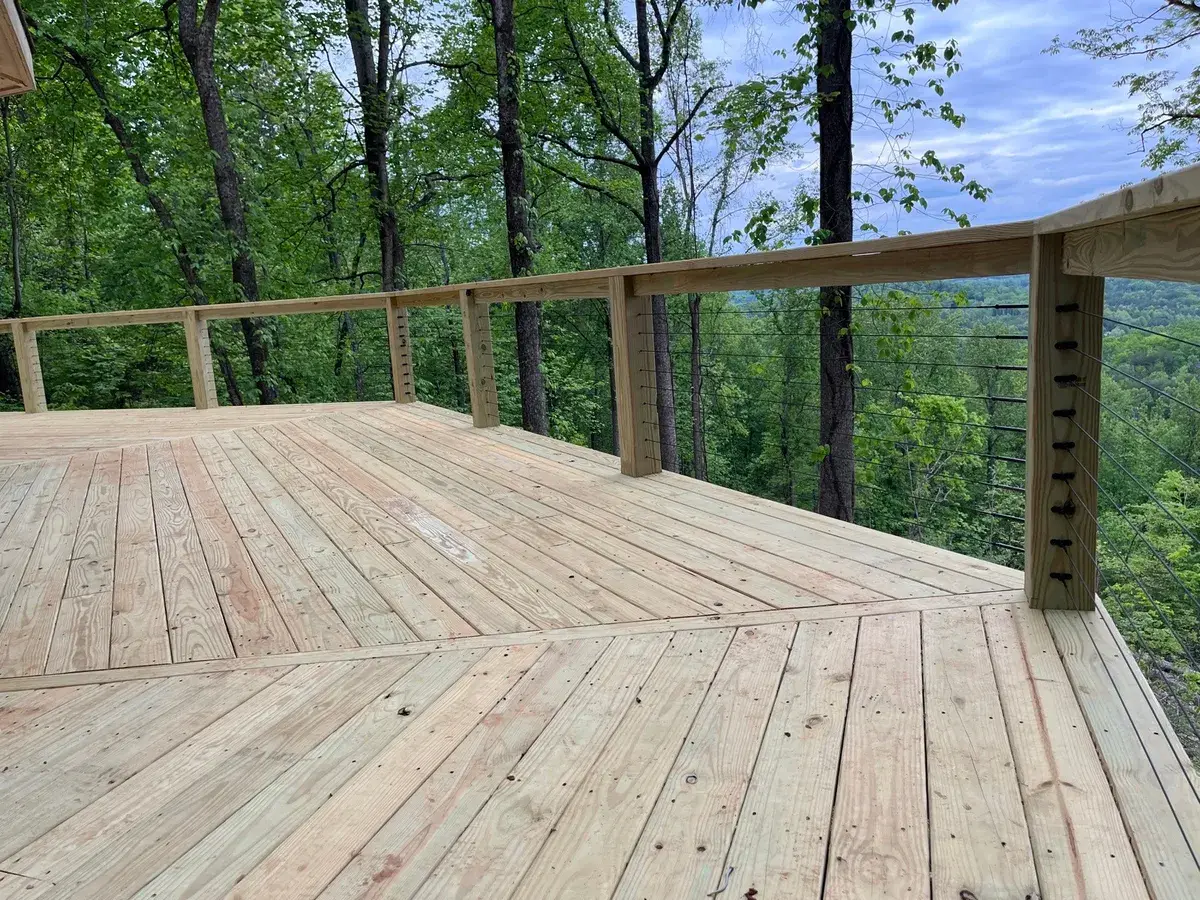
Deck & Porch Building in Sugar Hill, GA
Sugar Hill decks are mostly as old as the 1990s houses behind them: pressure-treated pine off a split-foyer or above a basement, now near the end of its life. In Parkview East and Sugar Crossing the lots are fairly tight, so replacements are sized to fit, often with composite boards and a covered section for shade. Townhome decks and balconies are part of the building, so that work leans toward repairs.
Gwinnett County · Sugar Hill, GA
Deck & Porch Building for Sugar Hill homes
Very little of Sugar Hill predates 1980. The subdivision era starts around 1990: Parkview East went up between 1990 and 1992, Sugar Crossing through the early and mid 90s, and Lenox Park and Glens of Sugar Hill at the end of the decade. Princeton Oaks was built in phases from the late 1980s into the 2010s, so neighbors on the same street can own houses twenty years apart. Newer infill such as Old Suwanee Enclave arrived around 2018, and the downtown and Peachtree Industrial corridors now carry three-story townhomes like Skyview on Broad and Park Ridge. The 1990s houses run smaller than their Forsyth neighbors, many of them two-story or split-foyer plans on rolling lots, and a good share step down to a basement. Their original siding, trim, windows and decks have reached replacement age at roughly the same time. The newer townhomes raise a different set of jobs, mainly interior painting in tall stairwells and finishing the details builders left plain.
Areas we work in Sugar Hill
- Parkview East
- Sugar Crossing
- Lenox Park
- Glens of Sugar Hill
- Princeton Oaks
- Skyview on Broad
Near E Center, The Bowl at Sugar Hill, Gary Pirkle Park and across the rest of Sugar Hill.
Recent deck & porch building work
Deck & Porch Building on Sugar Hill houses
The decks on Sugar Hill's 1990s houses are about the same age as the houses, pressure-treated pine built off the back of a split-foyer or above a basement, and many are reaching the end of their life. Lots in Parkview East and Sugar Crossing are fairly tight, so replacement decks here tend to be sized to fit, often with composite decking and a covered section for shade. In the newer townhome communities the decks and balconies are part of the building, so work there is usually about repairs and finish rather than a new build.
What usually gets missed
On a 90s Sugar Hill deck the frame often outlives its fasteners. Nails and early galvanized hardware corrode in treated pine, joist hangers rust through, and some ledgers were nailed rather than bolted to the house. On a tight lot the deck may also crowd a property line or easement the owner never knew about. We check fasteners, hangers and ledger connections first, then the posts and footings, before deciding whether any of the frame stays.
On a Sugar Hill job we check
- Lift a deck board at the wall and look at the ledger fasteners
- Check joist hangers and old nails for corrosion through the frame
- Decide frame reuse versus replacement before choosing decking
What the job actually involves
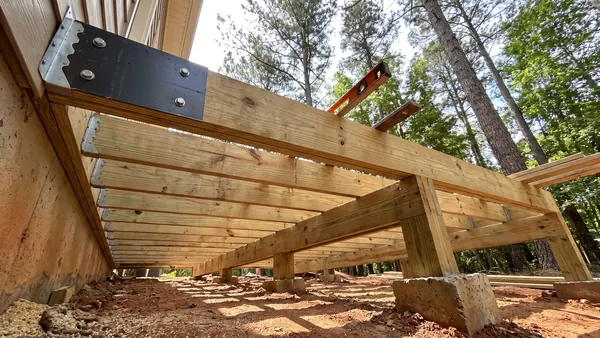
A deck is a structure first and a finish second. Footings, ledger attachment and framing decide whether it is safe in twenty years, and Georgia clay, rain and termites make those details matter.
We use ground-contact pressure-treated lumber for structure, hot-dipped galvanized or stainless fasteners and connectors, and flashing at the house, because rot and rust at the connections are what end most decks early.
How we run a deck & porch building job in Sugar Hill
- 1
Design, permits and layout
We agree on size, height, stairs and railing, then pull a permit where required. Footing locations are laid out and utilities are located before digging.
- 2
Set footings and posts
Holes are dug to the required depth and diameter for the local soil and frost depth, and concrete footings are poured. Georgia clay holds water, so drainage and footing size matter. Posts are set on proper connectors, not buried in dirt.
- 3
Attach the ledger and frame
If the deck attaches to the house, the ledger is flashed and bolted through the rim joist, not nailed. Beams and joists are framed with metal hangers and the right fasteners, with proper spacing.
- 4
Inspect framing
Where the jurisdiction requires it, an inspector looks at footings and framing before decking covers them.
- 5
Decking, stairs and railing
Decking goes down with correct gaps for drainage and expansion. Stairs are built with consistent risers, and railings are fastened to meet code height and strength.
- 6
Finish and cleanup
Pressure-treated wood needs time to dry before staining, which can be weeks, so we advise you on timing. Composite needs no stain. We clean the site and haul away scraps.
What moves the price
We will not quote Sugar Hill blind over the phone — these are the things we look at on site that decide the number.
- Size and height. Elevated decks need more framing, posts and railing.
- Decking material: pressure-treated lumber, cedar or composite.
- Railing style and stairs, which are labor heavy.
- Site conditions such as slope, access for equipment and soil.
- Whether it attaches to the house or stands free, plus covered porch or roof additions.
- Permit and inspection costs.
From a deck & porch building customer
“We’ve been working with WS Painting and Remodeling after two leaks in our home, and they’ve been fantastic. … The quality of their work has been outstanding and made a stressful situation much easier.”
Leak repairs
Want a real number for your Sugar Hill deck & porch building job?
The only way to price it honestly is to see it. We come out, walk the job and put it in writing — free, and with no obligation to book.
Call and we answer 24/7. Forms sent during the day get a call back the same day.
Deck & Porch Building in Sugar Hill — questions we get asked
- How long does it take to build a deck?
- Many take one to three weeks of working time, with permit review and weather adding to the calendar. Larger or covered structures take longer.
- Do I need a permit?
- Usually, especially for attached or elevated decks. We handle the paperwork where we can and tell you what to expect.
- Wood or composite?
- Pressure-treated is lower cost upfront but needs regular staining. Composite costs more and needs less upkeep. We lay out the tradeoffs for your situation.
- When can I stain a new pressure-treated deck?
- Usually after it has dried out, which can take several weeks to a few months depending on weather. Staining too soon traps moisture.
- Will the work tear up my yard?
- Some. Digging and material delivery leave marks. We protect what we can and leave the area tidy.
More in Sugar Hill
Gwinnett County housing, neighborhoods and what we do there.
Painting & remodeling in Sugar Hill →Other work in Sugar Hill
- Interior Painting in Sugar Hill
- Exterior Painting in Sugar Hill
- Cabinet Painting & Refinishing in Sugar Hill
- Deck & Fence Staining in Sugar Hill
- Commercial Painting in Sugar Hill
- Drywall Repair & Patching in Sugar Hill
- Kitchen Remodeling in Sugar Hill
- Bathroom Remodeling in Sugar Hill
- Basement Finishing in Sugar Hill
- Siding Replacement in Sugar Hill
- Flooring Installation in Sugar Hill
Prefer to talk it through? Dan picks up.
(470) 419-0922