
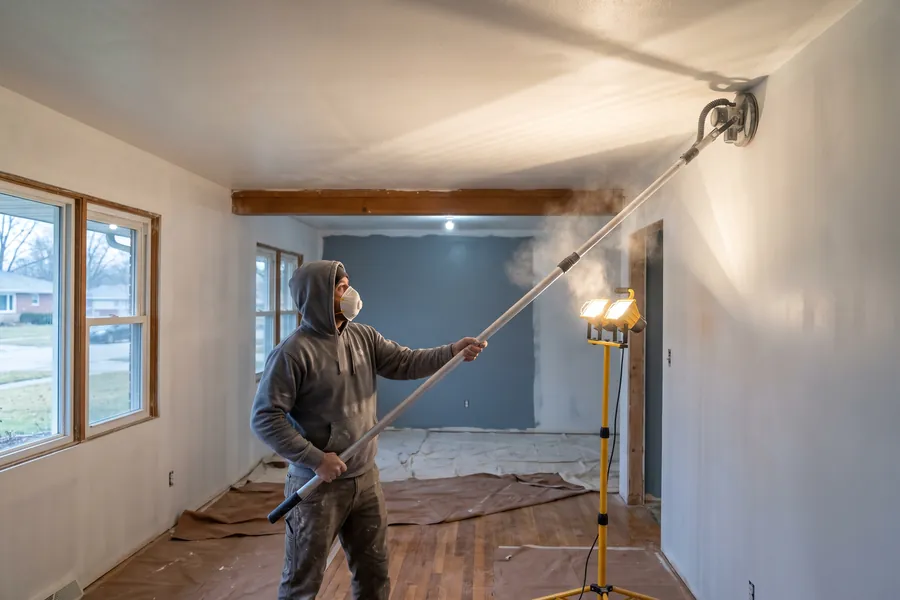
Drywall Repair & Patching in Sugar Hill, GA
Sugar Hill drywall repair often starts with someone else's work. In the early-90s houses, patches from previous owners sit proud or never matched, alongside cracks at the split-foyer stair wall and nail pops along the ceilings. Basements can hide water damage behind furniture for years. In the newer three-story townhomes, it is stairwell cracks, dented corners and shared-wall seams. Tell us what you have found and we will plan the repair.
Gwinnett County · Sugar Hill, GA
Drywall Repair & Patching for Sugar Hill homes
Very little of Sugar Hill predates 1980. The subdivision era starts around 1990: Parkview East went up between 1990 and 1992, Sugar Crossing through the early and mid 90s, and Lenox Park and Glens of Sugar Hill at the end of the decade. Princeton Oaks was built in phases from the late 1980s into the 2010s, so neighbors on the same street can own houses twenty years apart. Newer infill such as Old Suwanee Enclave arrived around 2018, and the downtown and Peachtree Industrial corridors now carry three-story townhomes like Skyview on Broad and Park Ridge. The 1990s houses run smaller than their Forsyth neighbors, many of them two-story or split-foyer plans on rolling lots, and a good share step down to a basement. Their original siding, trim, windows and decks have reached replacement age at roughly the same time. The newer townhomes raise a different set of jobs, mainly interior painting in tall stairwells and finishing the details builders left plain.
Areas we work in Sugar Hill
- Parkview East
- Sugar Crossing
- Lenox Park
- Glens of Sugar Hill
- Princeton Oaks
- Skyview on Broad
Near E Center, The Bowl at Sugar Hill, Gary Pirkle Park and across the rest of Sugar Hill.
Recent drywall repair & patching work
Drywall Repair & Patching on Sugar Hill houses
In Sugar Hill's early-90s houses, drywall repair is usually about age and use: cracks above doors and at the split-foyer stair wall, nail pops along the ceilings, and patches from previous owners that never quite blended in. In basements, there is often damage where a past leak or a wet foundation wall soaked the bottom of the drywall, sometimes hidden behind furniture for years before anyone noticed. The newer three-story townhomes see different repairs, mainly settlement cracks in tall stairwells, dented corners from moving furniture up narrow stairs, and seams along shared walls.
What usually gets missed
Old patches from previous owners often sit proud of the wall or show a different texture, and painting over them leaves them visible. In basements, the risk is closing up drywall that is still damp or moldy. We check past patches under a work light to see how they blend, cut basement damage back to dry material, and fix the source of any water before repairing.
On a Sugar Hill job we check
- Check old patches under a work light before blending a repair
- Cut back basement drywall to dry board and fix the water source
- Repair stairwell corners with new bead rather than filling dents
What the job actually involves
Most drywall repairs are judged on one thing: whether you can still see the patch afterward. Matching the texture and the surrounding wall is the hard part, not filling the hole. And a crack or water stain that keeps coming back is a sign of something behind the wall that has to be found before the drywall is closed up.
We use drywall that matches the thickness of your walls or ceiling, setting-type or lightweight joint compound depending on the repair, paper or mesh tape at the joints, and a stain-blocking primer on every patch and water stain, because primer is what keeps a repair from flashing a different sheen or letting an old stain bleed through. Texture is matched with the same method already on the wall.
How we run a drywall repair & patching job in Sugar Hill
- 1
Find the cause before patching
We look at what caused the damage. A hairline crack over a door is usually seasonal settling and will hold once taped. A stair-step crack, or a door that no longer latches, can mean movement a patch will not hold, and we say so. A brown ring means water, and the leak gets traced and fixed before any board is touched, or the stain bleeds back through.
- 2
Open up and check what is behind the board
For water damage or a soft spot, we cut back to sound board and look at the framing, insulation and the back of the drywall. Wet insulation and moldy board come out rather than getting painted over. While the wall is open we confirm where the water came from, because closing it up over an active leak just buys a season.
- 3
Repair or replace the board
Small holes get a backed patch. A nail pop gets the fastener reset and re-secured to the stud, not just filled. A run of damaged or water-stained board gets cut out and replaced with new drywall of the same thickness. Replacing a sheet is sometimes cheaper and cleaner than chasing a patch across half a wall, and we will tell you which your wall needs.
- 4
Tape, coat and sand flat
Joints are taped and built up in coats, each wider than the last and sanded between, so the repair feathers into the flat of the wall instead of leaving a hump the light catches. In humid months each coat is given time to dry, because compound that is closed up damp lets the tape lift and blister later.
- 5
Match the texture
This is where most repairs show. Knockdown, orange peel and popcorn each get matched to the existing wall or ceiling rather than left as a smooth slick in a textured field. A patch that is flat and sound but the wrong texture still reads as a repair from across the room, so the texture is matched by hand before any paint.
- 6
Prime, paint and check in raking light
Every patch is spot-primed so it does not flash a different sheen, then the wall is painted, usually corner to corner because fresh paint rarely matches aged paint around a spot. We check the finished surface with a light held low and to the side, which shows any ridge or texture mismatch the overhead light hides, and fix it before the job is called done.
What moves the price
We will not quote Sugar Hill blind over the phone — these are the things we look at on site that decide the number.
- How many repairs and how big. One ceiling stain is a small job. Nail pops and cracks in every room are a day or more of patching, sanding and texture work.
- What caused the damage. A clean hole is cheap. Water damage means tracing and fixing the source first, and that roof or plumbing work is separate from the drywall.
- Texture. Matching knockdown, orange peel or popcorn takes more time and skill than a smooth wall. Popcorn that may predate the mid-1980s should be tested for asbestos before it is disturbed.
- Patch versus replacing the sheet. Cutting out and hanging new board, then taping a full sheet, costs more than a small patch but is the right call when the damage is widespread.
- Ceiling versus wall, and height. Ceiling work is slower and harder to texture-match, and two-story foyers or stairwell walls need staging to reach safely.
- Repainting. A repair almost always needs the wall repainted corner to corner, because a dab of touch-up paint rarely matches the aged paint around it.
From a drywall repair & patching customer
“It is very important to find people who do what they say and show up when they say they will. The paint job is top quality with top quality workmanship and paint. We are very pleased with the results.”
Painting
Want a real number for your Sugar Hill drywall repair & patching job?
The only way to price it honestly is to see it. We come out, walk the job and put it in writing — free, and with no obligation to book.
Call and we answer 24/7. Forms sent during the day get a call back the same day.
Drywall Repair & Patching in Sugar Hill — questions we get asked
- Can you make the patch invisible?
- On a smooth wall, yes, with proper feathering and a repaint of that wall. On a textured wall or ceiling the goal is a match you cannot pick out from normal standing distance, since textures are matched by hand and a trained eye up close may still find it. Most repairs that show failed on the texture or on skipping the repaint, not on the patch itself.
- Why does the same crack keep coming back?
- Because the cause is still there. Hairline cracks that open and close with the seasons can be taped and will usually hold. A crack that keeps returning in the same spot often tracks structural movement, and no amount of compound fixes that. We tell you when a crack is cosmetic and when it points to something under the house that needs a look first.
- There is a brown stain on my ceiling. Do you just paint over it?
- Not until the leak is found and fixed. Painting a water stain seals it for a while, then it bleeds back when the next rain or the next leak hits. We find the source first, let the area dry, replace any ruined board, then prime with a stain blocker and repaint so it does not return.
- Can I just patch it myself?
- A small nail hole or a doorknob ding, yes, with filler, sanding and a little paint. Where people get into trouble is texture matching, taping a big joint flat, and water damage that looks small on the surface and is larger inside the wall. If a home patch is telegraphing through the paint, it is almost always the texture or the feather.
- Do you repair plaster too, or only drywall?
- Both. Older homes across metro Atlanta, near the Marietta Square, around the Dallas courthouse and in the older Smyrna and Vinings cores, often have plaster over wood lath that cracks and lets go differently than drywall. A plaster repair is its own craft, so we match it rather than skim drywall mud over it and hope it holds.
Planning drywall repair & patching? Start here
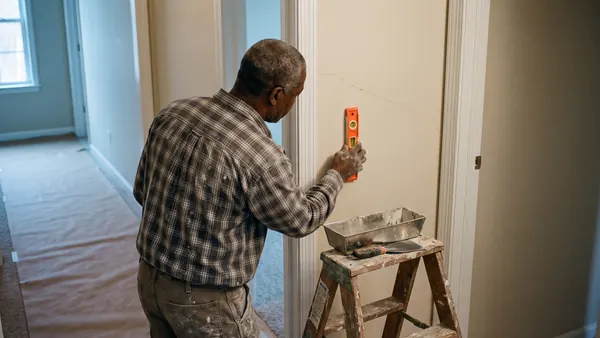
- Why drywall cracks, and which cracks actually matter Seasonal cracks patch and stay fixed; structural cracks come back. How to read the difference before you pay to repair one.
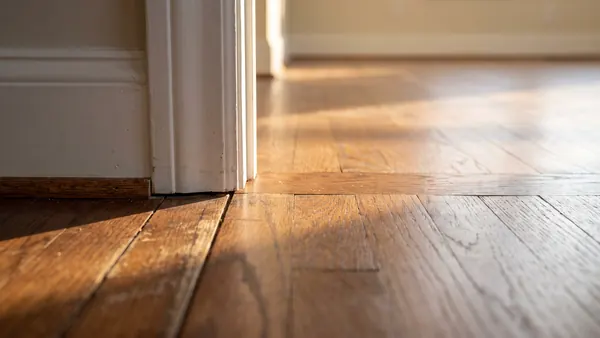
- Making a remodel look like it was always there The difference between a remodel that looks original and one that looks bolted-on is all in the seams, where new work meets old. Here is what it takes to make them disappear.
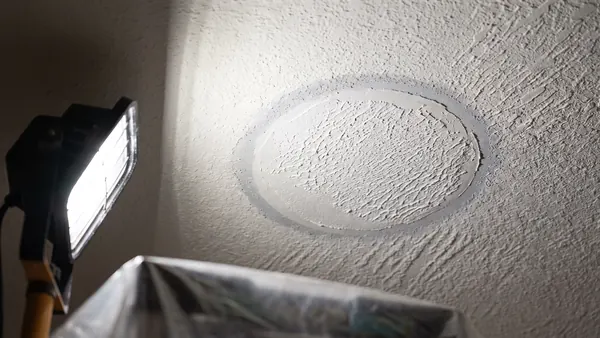
- Why a drywall patch shows — and how texture matching hides it A patch fails to disappear because of texture and sheen, not strength — here is what it takes to make a repair vanish.
More in Sugar Hill
Gwinnett County housing, neighborhoods and what we do there.
Painting & remodeling in Sugar Hill →Other work in Sugar Hill
- Interior Painting in Sugar Hill
- Exterior Painting in Sugar Hill
- Cabinet Painting & Refinishing in Sugar Hill
- Deck & Fence Staining in Sugar Hill
- Commercial Painting in Sugar Hill
- Kitchen Remodeling in Sugar Hill
- Bathroom Remodeling in Sugar Hill
- Basement Finishing in Sugar Hill
- Deck & Porch Building in Sugar Hill
- Siding Replacement in Sugar Hill
- Flooring Installation in Sugar Hill
Prefer to talk it through? Dan picks up.
(470) 419-0922