
Siding Replacement in Woodstock, GA
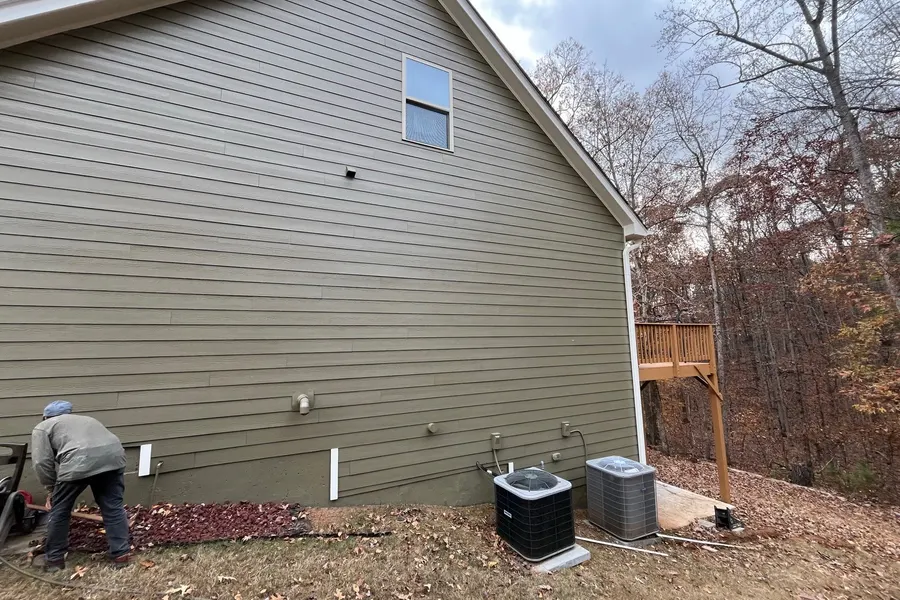
On a Towne Lake house in Woodstock, new siding usually means the sides and back, while the brick or stone front stays. The late-80s and 90s builder lap has taken years of shade, sprinkler spray and runoff, and it fails first near the ground and around decks. Most owners move to fiber cement, and the tall rear walls over walkout basements make it a bigger job than it looks. Downtown frame houses often have clapboard worth repairing.
Cherokee County · Woodstock, GA
Siding Replacement for Woodstock homes
The core of the stock is the Towne Lake build-out that began in the late 1980s: Eagle Watch, developed by Arvida around an Arnold Palmer golf course and filled in through the early 1990s, then Towne Lake Hills around the Arthur Hills course that opened in 1994, with Wyngate, Rose Creek and the rest following. These are mostly two-story traditional houses, often brick or stone on the front with lap siding on the sides and rear, set on rolling, wooded ground that drains toward Noonday Creek and the Little River arm of the lake. That grade is why so many have full or partial basements, some daylight or walkout, a lot of them still unfinished, and why tall rear decks are common. Downtown is the other end of the range: the Dean House from 1875, the 1894 Century House and early-1900s frame houses along streets like Rope Mill Road, now ringed by the townhomes and small-lot houses of the newer downtown build-out. The old houses mean wood clapboard, plaster and old paint layers; the new ones mean early repaints and finish upgrades.
Areas we work in Woodstock
- Downtown Woodstock
- Towne Lake
- Eagle Watch
- Towne Lake Hills
- Wyngate
- Rose Creek
Near Elm Street Cultural Arts Village (Woodstock Arts), Olde Rope Mill Park, Dupree Park and across the rest of Woodstock.
Recent siding replacement work
Siding Replacement on Woodstock houses
Siding replacement in Woodstock is mostly about the sides and backs of the Towne Lake houses, where the fronts are brick or stone and the rest is lap siding put up in the late 1980s and 1990s. That builder siding has had three decades of shade, sprinkler spray and runoff, and the boards nearest the ground and around the decks give out first. Owners usually replace it with fiber cement and keep the masonry fronts. The tall rear walls over walkout basements make it a bigger job than the floor plan suggests, with staging on the downhill side. Downtown, the older frame houses have wood clapboard that is often worth repairing instead, and the newer townhomes rarely need siding work yet.
What usually gets missed
The miss is replacing siding without fixing what rotted it. Where boards failed around a deck, a window or the base of the wall, the sheathing and framing behind them are often soft too, and new siding over bad sheathing just hides the damage. We strip a section, check the sheathing and the flashing at windows, doors and the deck connection, and correct the water path before new siding goes on. The seam where siding meets the brick front needs its own flashing detail.
On a Woodstock job we check
- Inspect sheathing behind failed boards before new siding goes up
- Flash windows, doors and the deck connection before installing
- Detail the seam where new siding meets the brick or stone front
What the job actually involves
Siding is a weather barrier, and what sits behind it matters as much as what you see. Replacement is the chance to find and fix hidden water damage, flash windows properly, and put the wall back together right.
We use a lapped weather barrier, metal and tape flashing at openings, and corrosion-resistant fasteners, because siding itself only works as part of that water-shedding system behind it.
How we run a siding replacement job in Woodstock
- 1
Inspect and choose material
We check the existing siding, sheathing and trim for rot, moisture and insect damage, and talk through options: vinyl, fiber cement, engineered wood and others. Each has different costs, upkeep and installation needs.
- 2
Remove old siding and check the wall
Old siding comes off and we look at the sheathing underneath. Rotted sheathing and framing are replaced. This is where hidden water damage turns up, often around windows and below roof lines.
- 3
Install weather barrier and flashing
House wrap or building paper goes on, lapped so water sheds outward. Windows, doors and penetrations are flashed with tape and metal, which is the detail that keeps water out for the long run.
- 4
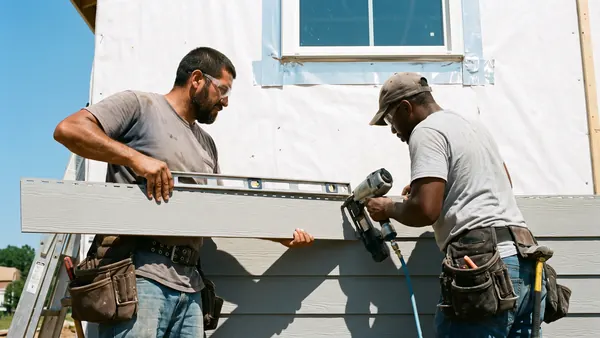
Hang siding
Siding goes up from the bottom, level, with the manufacturer's nailing and gap requirements followed. Vinyl needs room to expand in Georgia summer heat, so it is not nailed tight. Fiber cement is cut with proper dust control.
- 5
Trim, corners and sealing
Corner boards, window and door trim, and soffit and fascia details are installed and caulked with the right sealant. Fiber cement and wood are primed and painted.
- 6
Cleanup and walkthrough
Old siding, nails and scraps are hauled off, and we run a magnet over the yard for nails. We walk the house with you before closing out.
What moves the price
We will not quote Woodstock blind over the phone — these are the things we look at on site that decide the number.
- House size and number of stories, including gables.
- Siding material and trim package.
- Sheathing or framing repairs discovered after removal.
- Number of windows, doors and architectural details to flash and trim around.
- Whether soffit, fascia, gutters or insulation are included.
- Painting, if the material is not factory-finished.
From a siding replacement customer
“They knocked down and built a complete new wrap around deck and installed cable for the railings. … Repaired and replaced siding and flooring due to extensive rot. … Dan provided daily updates and pictures of the project.”
Cabin deck, siding, bath and flooring
Want a real number for your Woodstock siding replacement job?
The only way to price it honestly is to see it. We come out, walk the job and put it in writing — free, and with no obligation to book.
Call and we answer 24/7. Forms sent during the day get a call back the same day.
Siding Replacement in Woodstock — questions we get asked
- How long does siding replacement take?
- A typical house takes about one to three weeks of work, depending on size, material and weather. Rot repair or complex trim can extend it.
- Will I be able to stay in the house?
- Yes. It is noisy outside, and we keep walls closed up each day so the house is weathertight at night.
- Which siding holds up best in Georgia?
- Fiber cement and quality vinyl both do well. Humidity, sun and termites matter in the choice. We explain the tradeoffs and what upkeep each needs.
- Do I need a permit?
- In some jurisdictions yes. We tell you what applies to your address.
- Can you just fix damaged sections?
- Sometimes. If the damage is limited and a match is available, a repair can make sense. If the siding is aging across the house, replacement is often the better call.
Planning siding replacement? Start here
- Does a new front door really change how your home looks? A front door changes how the whole house reads from the street, but a sound door that just looks tired often needs refinishing, not replacing.
- Choosing siding that holds up in Georgia Which materials earn their place on a Georgia house, and why the water-shedding details behind them decide how long the job lasts.
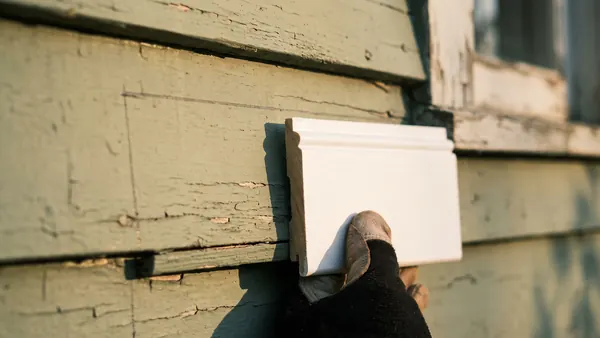
- Siding repair or full replacement: how to decide The decision comes down to whether the material itself is still sound and whether you can match what is already on the wall.

More in Woodstock
Cherokee County housing, neighborhoods and what we do there.
Painting & remodeling in Woodstock →Other work in Woodstock
- Interior Painting in Woodstock
- Exterior Painting in Woodstock
- Cabinet Painting & Refinishing in Woodstock
- Deck & Fence Staining in Woodstock
- Commercial Painting in Woodstock
- Drywall Repair & Patching in Woodstock
- Kitchen Remodeling in Woodstock
- Bathroom Remodeling in Woodstock
- Basement Finishing in Woodstock
- Deck & Porch Building in Woodstock
- Flooring Installation in Woodstock
Prefer to talk it through? Dan picks up.
(470) 419-0922