
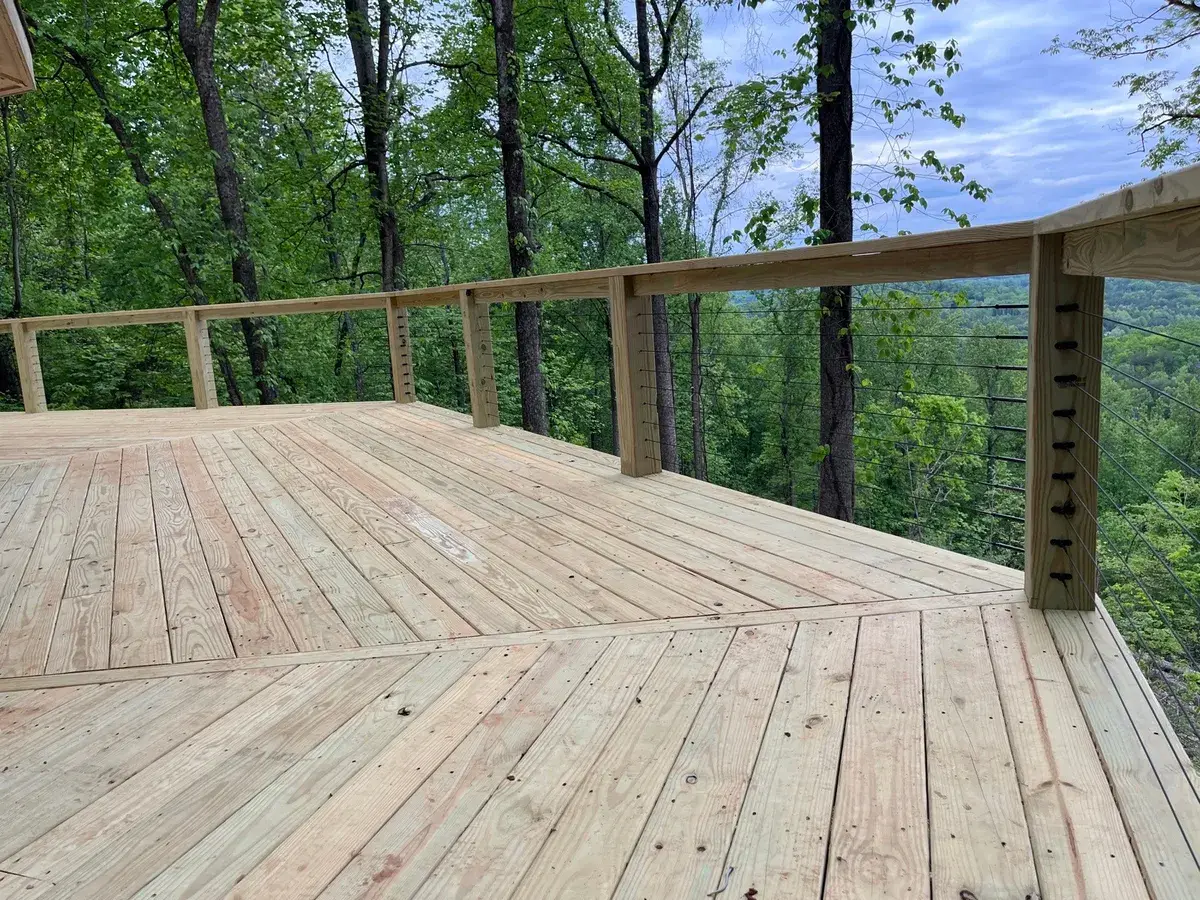
Deck & Porch Building in Woodstock, GA
Across Towne Lake in Woodstock, the back door often sits a full level above the yard, so a new deck needs tall posts, hillside footings and long stairs. Many owners are replacing a late-80s or 90s deck that was nailed together on posts set in the ground. Others want a screened porch or roofed deck over the walkout, and the tree cover makes the choice between wood and composite worth a real conversation.
Cherokee County · Woodstock, GA
Deck & Porch Building for Woodstock homes
The core of the stock is the Towne Lake build-out that began in the late 1980s: Eagle Watch, developed by Arvida around an Arnold Palmer golf course and filled in through the early 1990s, then Towne Lake Hills around the Arthur Hills course that opened in 1994, with Wyngate, Rose Creek and the rest following. These are mostly two-story traditional houses, often brick or stone on the front with lap siding on the sides and rear, set on rolling, wooded ground that drains toward Noonday Creek and the Little River arm of the lake. That grade is why so many have full or partial basements, some daylight or walkout, a lot of them still unfinished, and why tall rear decks are common. Downtown is the other end of the range: the Dean House from 1875, the 1894 Century House and early-1900s frame houses along streets like Rope Mill Road, now ringed by the townhomes and small-lot houses of the newer downtown build-out. The old houses mean wood clapboard, plaster and old paint layers; the new ones mean early repaints and finish upgrades.
Areas we work in Woodstock
- Downtown Woodstock
- Towne Lake
- Eagle Watch
- Towne Lake Hills
- Wyngate
- Rose Creek
Near Elm Street Cultural Arts Village (Woodstock Arts), Olde Rope Mill Park, Dupree Park and across the rest of Woodstock.
Recent deck & porch building work
Deck & Porch Building on Woodstock houses
Building a deck in Woodstock usually means building up. On the sloped lots across Towne Lake, the back door sits a full level or more above the yard, so a new deck needs tall posts, solid footings on a hillside and long stair runs down to the lawn or the walkout patio. Many owners are replacing the original deck from the late 1980s or 1990s, built the way decks were built then, with nails, a lightly fastened ledger and posts set straight in the ground. Others want a screened porch or a roofed deck over the walkout so the space underneath stays dry and usable. The tree cover means shade, needles and leaf litter, which shapes the choice between wood and composite.
What usually gets missed
The ledger is the connection that matters most. On the original decks it is often nailed to the rim joist without flashing, and thirty years of water can rot the rim behind it where nobody can see it from the deck. We take the old ledger off and inspect the house framing before attaching anything new. On a hillside, footings also need firm ground that runoff will not wash out, so we watch how water moves across the slope before laying them out.
On a Woodstock job we check
- Remove the old ledger and inspect the rim joist behind it
- Set footings in firm soil where runoff will not undercut them
- Plan drainage so a roofed deck keeps the walkout patio dry
What the job actually involves
A deck is a structure first and a finish second. Footings, ledger attachment and framing decide whether it is safe in twenty years, and Georgia clay, rain and termites make those details matter.
We use ground-contact pressure-treated lumber for structure, hot-dipped galvanized or stainless fasteners and connectors, and flashing at the house, because rot and rust at the connections are what end most decks early.
How we run a deck & porch building job in Woodstock
- 1
Design, permits and layout
We agree on size, height, stairs and railing, then pull a permit where required. Footing locations are laid out and utilities are located before digging.
- 2
Set footings and posts
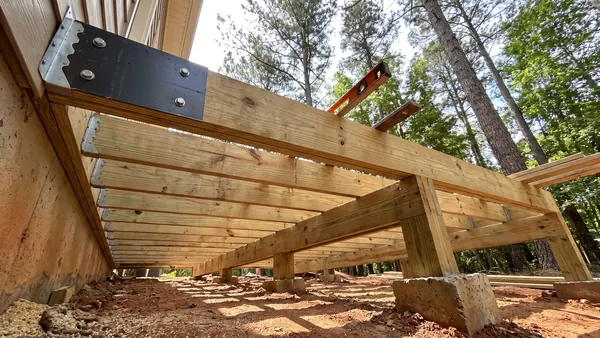
Holes are dug to the required depth and diameter for the local soil and frost depth, and concrete footings are poured. Georgia clay holds water, so drainage and footing size matter. Posts are set on proper connectors, not buried in dirt.
- 3
Attach the ledger and frame
If the deck attaches to the house, the ledger is flashed and bolted through the rim joist, not nailed. Beams and joists are framed with metal hangers and the right fasteners, with proper spacing.
- 4
Inspect framing
Where the jurisdiction requires it, an inspector looks at footings and framing before decking covers them.
- 5
Decking, stairs and railing
Decking goes down with correct gaps for drainage and expansion. Stairs are built with consistent risers, and railings are fastened to meet code height and strength.
- 6
Finish and cleanup
Pressure-treated wood needs time to dry before staining, which can be weeks, so we advise you on timing. Composite needs no stain. We clean the site and haul away scraps.
What moves the price
We will not quote Woodstock blind over the phone — these are the things we look at on site that decide the number.
- Size and height. Elevated decks need more framing, posts and railing.
- Decking material: pressure-treated lumber, cedar or composite.
- Railing style and stairs, which are labor heavy.
- Site conditions such as slope, access for equipment and soil.
- Whether it attaches to the house or stands free, plus covered porch or roof additions.
- Permit and inspection costs.
From a deck & porch building customer
“This time it was a deck project as well as a full front door replacement. … Most importantly if there is something that is not to your liking, he will make it right. Not the norm in the contractor world.”
Deck and front door replacement
Want a real number for your Woodstock deck & porch building job?
The only way to price it honestly is to see it. We come out, walk the job and put it in writing — free, and with no obligation to book.
Call and we answer 24/7. Forms sent during the day get a call back the same day.
Deck & Porch Building in Woodstock — questions we get asked
- How long does it take to build a deck?
- Many take one to three weeks of working time, with permit review and weather adding to the calendar. Larger or covered structures take longer.
- Do I need a permit?
- Usually, especially for attached or elevated decks. We handle the paperwork where we can and tell you what to expect.
- Wood or composite?
- Pressure-treated is lower cost upfront but needs regular staining. Composite costs more and needs less upkeep. We lay out the tradeoffs for your situation.
- When can I stain a new pressure-treated deck?
- Usually after it has dried out, which can take several weeks to a few months depending on weather. Staining too soon traps moisture.
- Will the work tear up my yard?
- Some. Digging and material delivery leave marks. We protect what we can and leave the area tidy.
More in Woodstock
Cherokee County housing, neighborhoods and what we do there.
Painting & remodeling in Woodstock →Other work in Woodstock
- Interior Painting in Woodstock
- Exterior Painting in Woodstock
- Cabinet Painting & Refinishing in Woodstock
- Deck & Fence Staining in Woodstock
- Commercial Painting in Woodstock
- Drywall Repair & Patching in Woodstock
- Kitchen Remodeling in Woodstock
- Bathroom Remodeling in Woodstock
- Basement Finishing in Woodstock
- Siding Replacement in Woodstock
- Flooring Installation in Woodstock
Prefer to talk it through? Dan picks up.
(470) 419-0922