
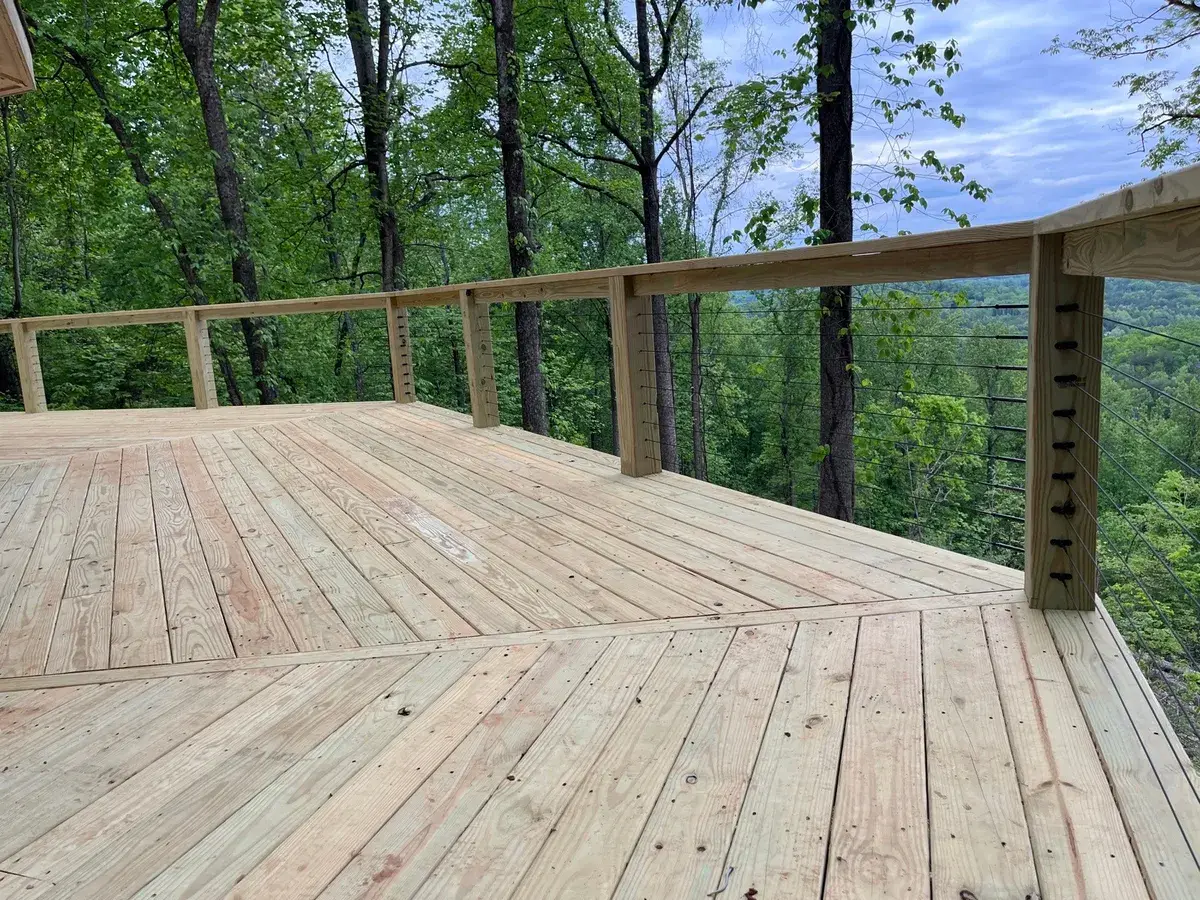
Deck & Porch Building in Roswell, GA
Roswell homeowners replacing a 1980s deck usually want more than they had. In Horseshoe Bend, Martin's Landing and along the creeks, the original often sits a full story up on a sloped lot, and shade has kept it damp for decades. Rebuilding means new footings, framing and boards, often bigger, with wider stairs, better railing or a covered section, and composite decking is a common pick under heavy tree cover.
Fulton County · Roswell, GA
Deck & Porch Building for Roswell homes
Roswell's population multiplied between 1970 and 2000, and the housing records that growth. Martin's Landing and Brookfield Country Club date mostly to the late 1970s; Horseshoe Bend, Saddle Creek, Loch Highland and Wildwood Springs filled in through the 1980s; Barrington Farms and Edenwilde followed in the 1990s. Much of that stock is wood-sided or wood-trimmed, with cedar, hardboard and brick fronts, and the rolling ground that falls toward the river and the creeks gives many lots a slope and a walk-out basement. Older still is the historic district: the Mill Village around Sloan Street, where some millworker housing dates to the 1850s, and the blocks along Canton Street and Mimosa Boulevard, with old wood, plaster and many layers of earlier paint. Newer infill townhomes, such as Harlow and Ashbury, are the exception rather than the rule. For painting and remodeling that adds up to a lot of carpentry before paint, decks and siding at replacement age, and kitchens and baths on their first or second remodel.
Areas we work in Roswell
- Martin's Landing
- Horseshoe Bend
- Brookfield Country Club
- Barrington Farms
- Saddle Creek
- Mill Village
Near Bulloch Hall, Barrington Hall, Roswell Mill ruins and the Vickery Creek trails and across the rest of Roswell.
Recent deck & porch building work
Deck & Porch Building on Roswell houses
Many Roswell decks are original to 1980s houses, built off the back on sloped lots and often a full story above grade. In Horseshoe Bend, Martin's Landing and the neighborhoods along the creeks, owners want them rebuilt bigger, with wider stairs, better railing or a covered porch over part of the footprint. Shade and leaf litter keep the wood damp, so the old deck is usually at the end of its life rather than due for a refresh. Replacement means new footings, framing and boards, and owners under heavy tree cover often choose composite decking to cut down on cleaning and staining.
What usually gets missed
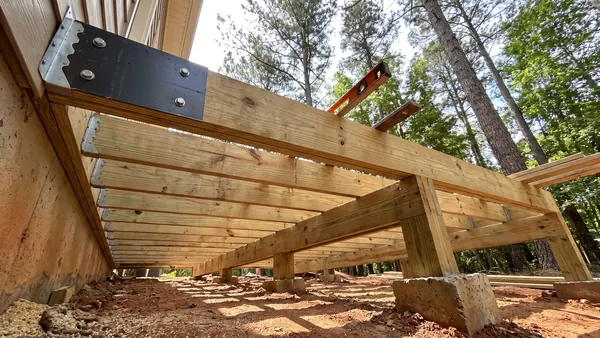
The most important piece on an older raised deck is how it attaches to the house. Decks of that era were often nailed to the rim without flashing, and water behind the ledger rots the house framing as well as the deck. We pull the old ledger, inspect the rim joist, and flash and bolt the new connection. On steep lots, footing depth and post size matter more, so those are checked against the real height before the design is final.
On a Roswell job we check
- Inspect the house rim joist behind the old ledger
- Flash and bolt the new ledger to the house framing
- Size posts and footings for the true height of the deck
What the job actually involves
A deck is a structure first and a finish second. Footings, ledger attachment and framing decide whether it is safe in twenty years, and Georgia clay, rain and termites make those details matter.
We use ground-contact pressure-treated lumber for structure, hot-dipped galvanized or stainless fasteners and connectors, and flashing at the house, because rot and rust at the connections are what end most decks early.
How we run a deck & porch building job in Roswell
- 1
Design, permits and layout
We agree on size, height, stairs and railing, then pull a permit where required. Footing locations are laid out and utilities are located before digging.
- 2
Set footings and posts
Holes are dug to the required depth and diameter for the local soil and frost depth, and concrete footings are poured. Georgia clay holds water, so drainage and footing size matter. Posts are set on proper connectors, not buried in dirt.
- 3
Attach the ledger and frame
If the deck attaches to the house, the ledger is flashed and bolted through the rim joist, not nailed. Beams and joists are framed with metal hangers and the right fasteners, with proper spacing.
- 4
Inspect framing
Where the jurisdiction requires it, an inspector looks at footings and framing before decking covers them.
- 5
Decking, stairs and railing
Decking goes down with correct gaps for drainage and expansion. Stairs are built with consistent risers, and railings are fastened to meet code height and strength.
- 6
Finish and cleanup
Pressure-treated wood needs time to dry before staining, which can be weeks, so we advise you on timing. Composite needs no stain. We clean the site and haul away scraps.
What moves the price
We will not quote Roswell blind over the phone — these are the things we look at on site that decide the number.
- Size and height. Elevated decks need more framing, posts and railing.
- Decking material: pressure-treated lumber, cedar or composite.
- Railing style and stairs, which are labor heavy.
- Site conditions such as slope, access for equipment and soil.
- Whether it attaches to the house or stands free, plus covered porch or roof additions.
- Permit and inspection costs.
From a deck & porch building customer
“The entire inside of my home was gutted and remodeled. … When the home would give us unexpected surprises, Dan would calm me down and give me several options. … The workmanship is impeccable!!”
Whole-interior remodel, exterior trim
Want a real number for your Roswell deck & porch building job?
The only way to price it honestly is to see it. We come out, walk the job and put it in writing — free, and with no obligation to book.
Call and we answer 24/7. Forms sent during the day get a call back the same day.
Deck & Porch Building in Roswell — questions we get asked
- How long does it take to build a deck?
- Many take one to three weeks of working time, with permit review and weather adding to the calendar. Larger or covered structures take longer.
- Do I need a permit?
- Usually, especially for attached or elevated decks. We handle the paperwork where we can and tell you what to expect.
- Wood or composite?
- Pressure-treated is lower cost upfront but needs regular staining. Composite costs more and needs less upkeep. We lay out the tradeoffs for your situation.
- When can I stain a new pressure-treated deck?
- Usually after it has dried out, which can take several weeks to a few months depending on weather. Staining too soon traps moisture.
- Will the work tear up my yard?
- Some. Digging and material delivery leave marks. We protect what we can and leave the area tidy.
More in Roswell
Fulton County housing, neighborhoods and what we do there.
Painting & remodeling in Roswell →Other work in Roswell
- Interior Painting in Roswell
- Exterior Painting in Roswell
- Cabinet Painting & Refinishing in Roswell
- Deck & Fence Staining in Roswell
- Commercial Painting in Roswell
- Drywall Repair & Patching in Roswell
- Kitchen Remodeling in Roswell
- Bathroom Remodeling in Roswell
- Basement Finishing in Roswell
- Siding Replacement in Roswell
- Flooring Installation in Roswell
Prefer to talk it through? Dan picks up.
(470) 419-0922